Part-Time Gods of Fate, a new settingbook about god-like humans and human gods.
By Frank Falkenberg (also interview and translation).
Content
Imagine you are the Goddess of the Blizzard. In your hometown Fire Giants start a raid and are about to incinerate everything. On the other side, today is your 8 year old daughter’s birthday, which you simply cannot miss. Your fellow gods in your pantheon count on you. But your daughter worships you. What will you do? How do you decide?
Those are the kind of problems a player character in Part-Time Gods of Fate has to face. Part-Time Gods of Fate is the current Fate version of the four year old Part-Time Gods RPG by Third Eye Games.
Right now a Kickstarter campaign for financing the Fate edition is running. And it is running quite well, the first stretch goals for additional supplements are already unlocked.
As I had the opportunity to try the Fate version of Part-Time Gods with some gaming friends in the form of Hangout gaming during the alpha-test phase, my interest was hooked, and I am quite curious about the final product.
Top
What is Part-Time Gods of Fate all about?
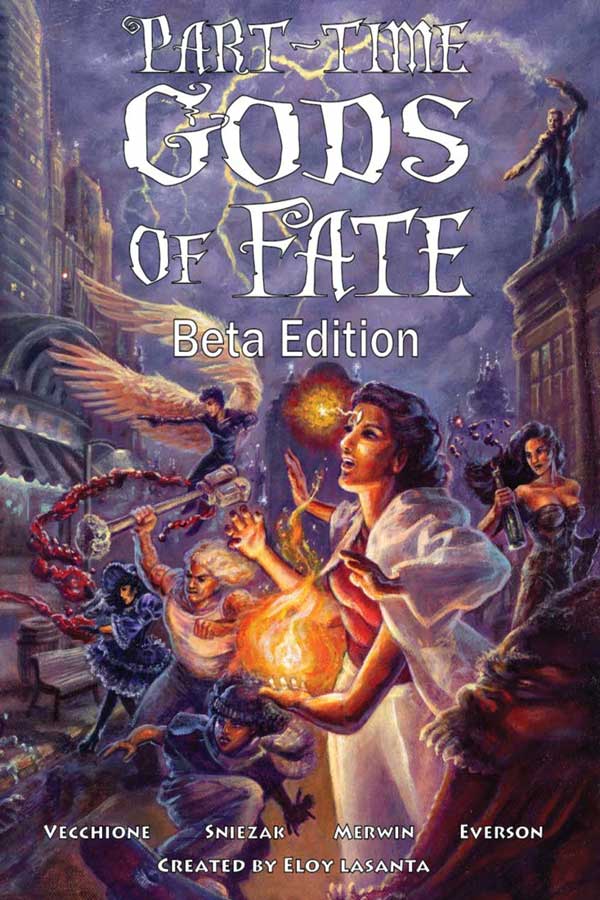
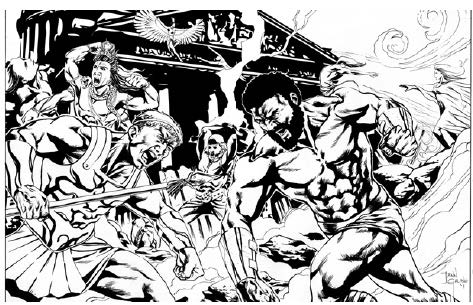
In the Fate Core setting Part-Time Gods players take the rolls of people in today’s modern world who have recently discovered their identity as young gods and their new divine abilities.
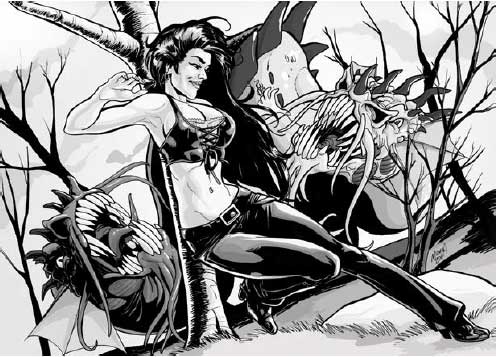
The reason for all this is “the Source”, something that is theorized to be the creator entity that created the whole universe. This Source was imprisoned by the old gods. But today the old gods are mostly dead and gone, all the while the sealed away entity struggles in its prison and tries to break it’s cage. This leads to supernatural energies leaking into our world and bringing forth hundreds of new gods – and even more monsters (called Outsiders), thirsty after the blood of the gods.
For mutual protection those new gods gather and form a “pantheon”, a group of deities. Each pantheon has its own territory, the region where its places of power, places of sanctuary, and places of their human identity are situated. Not only Outsiders might invade this territory, but other pantheons could have the idea to expand their sphere of influence – at the expense of the player characters.
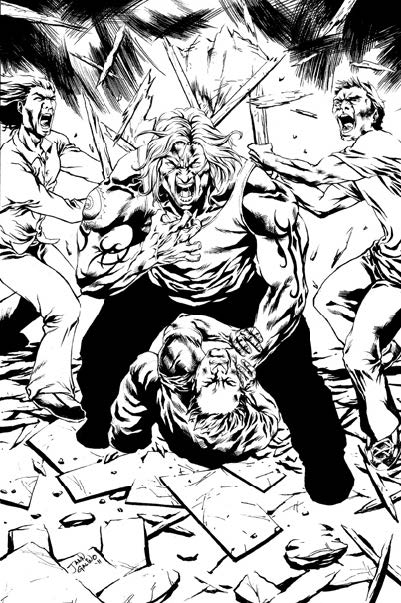
Being gods the characters command over definitely supernatural, divine powers, and have special abilities that exceed the humanely possible by far. In their role as a deity they are further embedded in a “theology”, belonging to a specific spiritual idiology which gives them support and goals for applying their enormous powers. Their divinity shows itself especially in the number of worshipers, believers, human followers who loyally and piously follow their god. Holy relics, “magic items”, associated with the domain over which the deity reigns are some of the benefits only gods can acquire – benefits which are of course highly desired and fought for.
So the new gods have a lot unnatural and supernatural enemies and rivalries, but those are often the least of their problems. Every new god has bonds, the human relationships, that what “grounds” the god’s human side and allows the character to function in the human society. Every deity has its normal, human occupation, its social environment, relatives, friends, colleagues, etc. And most of them don’t even know that they are acquainted or even related to a god.
Getting too involved with human bonds hinders the further development of the god’s divine powers. Concentrating on the development of the divine powers leads to a loss of the god’s bonds to human society and might lead to the god becoming a kind of an outsider him- or herself.
This balancing act between being human and being a god is what Part-Time Gods presents as the core conflict for the characters. Above and beyond that there are of course disagreements and arguments between the gods of the same pantheon, there are the theologies’ goals to achieve, which might collide with each other, and there is the own territory to secure, protect or even expand.
In their jobs humans could call it a day, but gods have their work to do 24/7!
It’s not easy being a god – let’s do it!
Top
An interview with the team of Part-Time Gods of Fate
After Dominik asked me if I would like to write an article about Part-Time Gods of Fate I have contacted the team-members of the Fate conversion who are all very accessible on Google+, and asked if they would be so kind to answer a few interview questions.
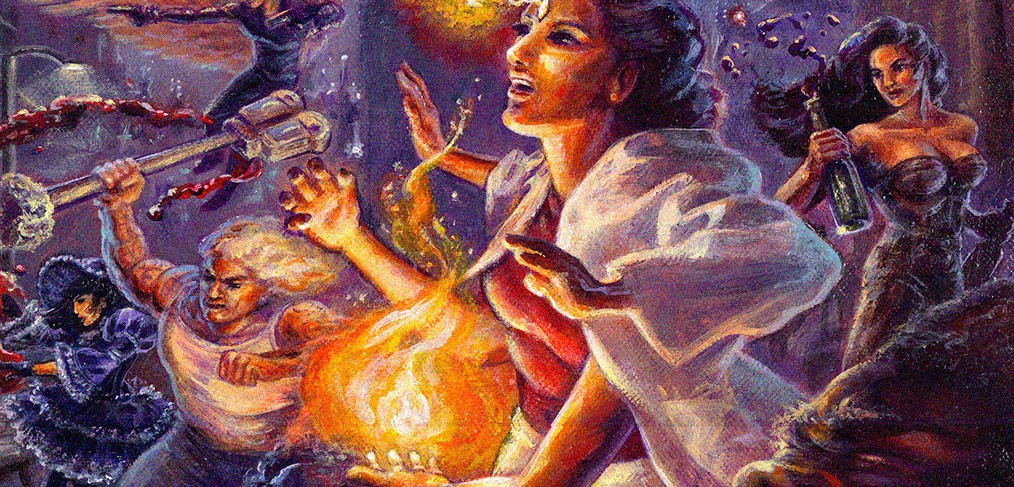
The following questions were prepared shortly after the start of the Kickstarter campaign for Part-Time Gods of Fate. The team of Part-Time Gods of Fate was so kind and cooperative and answered the questions and allowed their publication in german translation on the official german Fate website faterpg.de. The copyright owner for the illustrations, Eloy Lasanta, gave permission to use a few illustrations from Part-Time Gods of Fate for this article.
Additions in square brackets “[,,,]” by the author.
Question: Currently the Kickstarter project for Part-Time Gods of Fate is running and has already passed the minimum financing goal. Such a successful start is often to be credited to the work of a successful team behind such a project. The original version of Part-Time Gods was created and written by Eloy Lasanta (Third Eye Games). In the beta-version of the Fate adaptation Phil Vecchione, Chris Sniezak, Shawn Merwin, and Robert M. Everson (all from Encoded Design) are credited. Could you give us a short presentation of the development team for Part-Time Gods of Fate? Who contributed to what parts of the final product?
Phil Vecchione: So as you know Eloy Lasanta was the creator of the original Part-Time Gods. The Fate Conversion was done by Encoded Designs. The Encoded Team is made up of:
- Phil Vecchione – Phil is one of the founding members of the Gnome Stew Game Mastering blog, the author or co-author for four books from Engine Publishing, including Never Unprepared: The Complete Game Master’s Guide to Session Prep, a freelance game designer having worked for Third Eye Games, Evil Beagle Games, and Pelgrane Press, and co-host of the Misdirected Mark Podcasts.
- Chris Sniezak – Chris is the founder of Misdirected Mark Productions, which runs four podcasts about tabletop gaming, video games, and geekdom. He is a freelance writer working for GMing Tips, and has written for Pelgrane Press, and Magpie Games.
- Shawn Merwin – Shawn has been a freelance game designer working with WoTC on 3rd Edition and 4th edition D&D. He has been a driving force in several Organized Play programs, and as a designer of two consecutive seasons of the D&D Encounters program: War of Everlasting Darkness and Against the Cult of Chaos. He has also designed or edited material for Goodman Games, Mongoose Publishing, and Kenzer & Co.
- Robert M. Everson – Bob Everson is a proofreader and editor for the ENnie Award winning blog Gnome Stew, and has worked previously on books for Engine Publishing, Arc Dream Publishing, and Headless Hydra Games..
As for what we did for Part-Time Gods of Fate we had the following roles:
- Chris & Phil did the game design and writing.
- Shawn & Bob did game development, editing, and proofreading.
- Chris did the layout of the Beta rules.
- Phil designed the character sheet and territory sheet.
- Eloy will be laying out the final version of the book.
Question: Part-Time Gods in its original version for the Dynamic Gaming System – lite (DGS-lite) was quite successfully funded via Kickstarter in 2011, there are some supplements and follow-up products for the original version available, too. As Part-Time Gods is still a relatively “young” RPG, why did you decide to work on a Fate Core adaptation? Why changing to a system like Fate Core which is set on an even higher level of abstraction as the original DGS-lite system was? What did you hope to achieve by using Fate Core as a rules system? What were your conversion goals?
Phil Vecchione: The original idea for the Fate conversion was Eloy’s. He had put a Fate conversion of PTG as a stretch goal into the Kickstarter for Divine Instruments and Minions of the Source. That Kickstarter did not unlock that goal. I was lucky enough to be asked by Eloy to be one of the co-authors on Minions of the Source.
Seperately, Chris and I were getting into Fate, and had done a homebrew conversion of the 1990’s Mayfair game Underground, for our personal use. We really enjoyed the play style of Fate, and were talking about other games that would be good fits for Fate. In that list was Part-Time Gods.
In terms of Fate being more abstract than the Dynamic Gaming System, we saw this as an opportunity to expand the ways that Part-Time Gods could be played. The feel of a game relies on the setting combined with the rules. So by pairing such a rich setting with a more abstract system, players could explore different types of stories.
Our conversion goal was twofold. First, we wanted the world of Part-Time Gods in Fate, meaning that at its core this game would be accessible to anyone who enjoyed Fate. Second, we wanted to bring some of the elements that made PTG unique into Fate. So we picked several areas that were things that we wanted to develop and not just convert. Those things were:
- Bonds
- Manifestations
- Entitlements
- Relics & Worshipers
Question: Compared to Fate Core the DGS-lite original system was a relatively “conventional” system. Fate Core uses very different approaches to structuring the game, GM-ing and playing the game. What were the most difficult elements to transfer into Fate? Did you notice some elements that actually were easier to model in Fate than in the original system? How about the different roles and responsibilities of players and GM in Fate-based games (player empowerment, cooperative creation, etc.) – did those Fate typical approaches require a different view of the Part-Time Gods setting?
Phil Vecchione: Overall the conversion was straightforward. There were far more similarities between PTG and Fate than differences.
The most difficult element that I converted was Bonds. There was a specific feel I wanted Bonds to have, being part stress track and part aspect. Chris and I went back and forth a few times until we got to the version now in the rules.
One of the easier elements to convert would have to be manifestations, the divine powers a god has. We knew early on we wanted them to be skills, and with the four actions (Overcome, Create Advantage, Attack, Defend) we had everything we needed.
In terms of the different roles and responsibilities, we wanted there to be a collaborative territory creation, inspired by The Dresden Files and other games, but I will let Chris talk more about that.
Chris Sniezak: So there’s a part in Fate Core and a bunch of games that I enjoy where all the players get together and help build the game’s setting. As Phil said The Dresden Files has city creation and The Hood by James Mullen has the players creating the neighborhood they’ll be playing in. I think this helps build ownership and investment in the game for the players who aren’t GMing, gives the GM a lot of assets to use when preparing – and while playing – the game, and creates a play space the players all understand, which helps get past some of the awkward moments of introducing NPCs and locations. So I built up a way for that to happen and then added a way for it to be used at the table. This is in the form of impending issues becoming problems, which are put on the territory sheet when they’re discovered. Then they move down a short track as they come closer to achieving their goals or arrive at their end states, which could take out the territory. If the territory is taken out, it causes a narrative and mechanical change to the territory and will put the PCs in a tough spot.
Question: Let’s talk about the Part-Time Gods setting a bit. There are some RPGs around that do take up the topic of playing gods or godlike beings (“Scion” or “Nobilis” to name a few well known). What sets Part-Time Gods apart from those other “play a god”-games? What makes Part-Time Gods unique? What is the core story to play in Part-Time Gods?
Phil Vecchione: What drew me to the original Part-Time Gods was that you are very ordinary people who now have this divine Spark. The Bonds mechanic basically keeps you tethered to your mortal life, so that you are always straddling the line between being an ordinary person and a god. For me, I think the core story of PTG is that struggle. Do you go to dinner with your spouse or do you stop that cyclops who is lurking in the park, and what are the consequences of that decision? The game is about having two massive responsibilities and having to figure out how to manage both. Then, sometimes it is about punching that cyclops right in the face and knocking it through a tree, because you are a god. 😉
Question: Part-Time Gods is built around the conflict between being a god and being a human, having normal human needs, social bonds that keep the godlike being “grounded”. A major role in modelling this central conflict do play the Bonds every character has. Social relationships and all the character drama revolving around it is a huge field – and one very few RPG do address mechanically. Could you please describe your mechanical approach regarding the characters’ Bonds and how they come into play during the game?
Phil Vecchione: Bonds are made up of three things: the object of the bond, which could be a person, a place, an ideal; an aspect that defines the character’s relationship with that object (My Wife is the World to Me); and a number of stress boxes, between 1 and 5 representing the depth of that bond.
In game, the player can call upon the Bond like any other aspect. Perhaps that god is able to endure something hard because of his deep love for his wife. At the same time, the GM is able to compel that aspect, forcing the player to decide between dinner with his wife and that rampaging cyclops. Then, at some point during play, the god will let down the object of the bond, often by choosing their divine commitments over their human ones. When that happens, the Bond takes stress.
If a Bond takes too much stress it can break, which deals the character a consequence. Should a god ever lose all their Bonds, they lose control of their divine power and are taken out. The good part is that through the milestone system, Bonds can be healed, deepened, and changed.
Question: A good part of the mood in the original version of Part-Time Gods was set by the illustrations. In the beta-version a lot of those illustrations were kept. Will the final version of Part-Time Gods of Fate present the art from the original version? Will there be new illustrations? Currently [as of June 3rd 2015] there are no stretch goals given in the Kickstarter project – do you consider a “visual upgrade” to color illustrations as a stretch goal?
Phil Vecchione: All of the original art will be included in the book, though the book size is going to be changed to the same size as the Fate Core book. There is not a plan to do any new illustrations, as our push is to get Part-Time Gods of Fate published in a timely manner, with hopes of having copies at Gen Con.
As for Stretch Goals, our original plan was to just fund the creation of the book, but with the success of the campaign, we are planning a few stretch goals that will further expand the game by converting the major supplements: Divine Instruments and Minions of the Source. [Note: At the current state of the Kickstarter campaign as of June 12th 2015 Divine Instruments is already unlocked and Minions of the Source is next to unlock.]
Question: What will be in the final book? Is this a stand-alone RPG containing the whole Fate Core rules (like Atomic Robo RPG) or is it a setting-book requiring the core rules in addition?
Phil Vecchione: Part-Time Gods of Fate will require the core rules. I had a talk with Fred Hicks of Evil Hat, and it was on his advice not to include the text from Fate Core. That text is easily accessible, and adding it in only increases the cost of the book, by adding more pages. You can pick up Fate Core as a ‘pay what you want’ product on Drive Thru RPG.
Question: How are you planning the continuing support for Part-Time Gods of Fate after delivering the core book? Are you planning to convert the supplements and other existing products for the original version to Fate Core?
Phil Vecchione: Depending on the success of the campaign, the supplements may be converted as part of the campaign. As for future support, we have not talked to Eloy about that, but we would love to do some adventure design, or collaborate on any future supplements so that there is a Fate version.
Question: Again back to the development team: Which part of your contribution to the final product are you most proud of? Which “aspects” of Part-Time Gods of Fate would you most heartily recommend to interested players?
Phil Vecchione: For me its Bonds followed next by worshipers. I had a lot of fun designing the mechanics for both.
Chris Sniezak: The manifestations followed by the stuff related to the territory. I like free form magic in games, and I think I provided a flexible and playable way to make godly power work.
Top
A look under the hood
Now follow some more detailed questions about certain rules-mechanical topics of the Fate adaptation. They are intended to allow those who are well versed in Fate to gain insight in certain design decisions, in the “why” behind the rules. I personally draw my enthusiasm for a RPG often more from the rules than from the setting. So I am especially grateful to the team for answering these questions.
Question: Stunts vs. Aspects: Part-Time Gods of Fate keeps Fate-typical character concept aspects. But then in the beta-version there are “occupation stunts” which are named equally to high-concept aspects. Aspects in Fate Core are always true. A “Firefighter” is capable in his occupation, because he has the high-concept “Firefighter”. Stunts should cover things out of the ordinary, things that a normal firefighter would never be able to do. Stunts cost refresh. Refresh is a very rare resource and additional refresh is not easy to come by.What is the design motivation to suggest for certain occupations to use one valuable stunt slot to obtain a stunt that only reinforces the high-concept aspect?
Chris Sniezak: So there’s two reasons for this, because I agree with you about the occupation stunts. What they do is actually make you a better version of that human aspect. Make no mistake, the human aspect isn’t a high concept aspect: it’s your human side. If you want a character who is more competent at their job, or the character’s profession is important to the player, or the player wants the character to be one of the better “whatevers” at that occupation, then you could choose these.
The second reason is they’re a call back to the original game, because there were occupations you took that cost some amount of points. I felt anyone interested in trying out this version of the game from the old one might like to see we brought them over.
I also don’t know if I agree with your assessment of stunts. One of the primary methods of building a stunt is to give a +2 to a skill when using a specific action type, in a specific situation. So if there’s a character with the high aspect Widowed Heart Surgeon with a Daughter, and I gave them the surgeon occupation stunt, it wouldn’t be much different than saying:
“Steady Hands. You get a +2 to your overcome Athletics actions when performing open heart surgery.”
The occupation stunts, which are also optional, play around with the ideas of half stunts and quarter stunts to make it so you don’t have to spend two or three refresh to actually get that feel a player is looking for that kind of character experience.
Question: Territory Creation: Creating the territory gives the characters roots, things to fight for and things and people to care for. But it implies a rather stationary, location-based campaign style. How about creating road-movie style campaigns in Part-Time Gods of Fate? There is even a Theology, the Drifting Kingdoms, that make it hard for a character to stay in one place over an extended time. Doesn’t this collide a bit with the location-based approach of Territory Creation?
Chris Sniezak: It’s actually not a hard answer. I like a more focused game experience, and that’s what we built. Toolkit games are cool. I’ve played a bunch of them and I think they’re fine, but we wanted a game where the gods needed to deal with the struggles between their human and divine sides. This game is also about the pantheon vs. everything else that’s coming at them, so there’s a “hold the line” aspect to it as problems are descending on their territory all the time. So that’s the primary play space we’re creating for this game. Does that mean there can’t be sessions or even arcs of the campaign where the part-time gods go to other territories and planes of existence? Of course not. In fact, that might be a huge part of dealing with whatever threats are arrayed against the territory and the part-time gods but the game does revolve around the territory for a more focused play experience.
Concerning the Drifting Kingdoms theology, their wanderlust is a drawback. They do need to go off somewhere else from time to time, but it doesn’t mean they can’t come back after being gone for as little as a day. It’s also a great place to drop in a one-off scenario for the pantheon or one of those on-the-road sessions.
Let’s talk about what you could do if you wanted a road-movie style campaign. Let’s say all of the gods are truckers or some kind of delivery people who travel long distances. There’s no reason you can’t just say the territory is the Highways and Byways of whatever country you’re in. The divine hubs can be the central locations important to the gods, truck stops, diners they tend to stop at, their homes, and where they keep their vehicles. I leave defining the territory to the group. So while the assumption is a city, there’s nothing saying it couldn’t be the campaign frame I’ve just laid out.
Question: Character Aspects: Part-Time Gods of Fate uses Aspects as known from Fate Core. Fate Core uses five aspects per character. This number is often too high already for a GM to be able to keep in view for compels.
Taking a look at one of the example characters, Amala Ali, in the beta-version, there are three main aspects (Human, Divine, Theology), plus three Bond aspects, plus an Entitlement (four arms) as an aspect, an Extra (worshiper) who have an aspect, too, and a Drawback, which is a kind of “trouble aspect”. That makes for nine Aspects in a single character. Gear aspects might add to that number. In a group of four players, that would amount to a considerable number of aspects the players and even more the GM will have to be aware of at all times.
Do you see any problems with so many aspects per character? How does this abundance of aspects and “aspect-like” abilities impact on the Fate Point economy in actual gameplay?
Phil Vecchione: Aspect bloat was something that we were always concerned with in the design. Ryan Macklin and Lenny Balsara talked about how they worked to reduce the number of aspects down from Spirit of the Century and The Dresden Files. The core Part-Time Gods of Fate character has 5 aspects:
- Human
- Divine
- Theology
- Bond
- Bond
It then sprawls a bit when you get into some of the entitlements, worshipers, Relics, or additional Bonds. My recommendation to newer Fate players is to stick to the five core aspects, and then as they get comfortable explore the additional aspects some of the other features offer.
Question: Manifestations: Those special, supernatural skills are mechanically treated as normal skills (four actions, specific stunts available).
As normal skills governing some supernatural abilities could be integrated into the skill pyramid just as the human skills are. Many magic systems for Fate Core do just that and include the supernatural skills in the total skill list.
Why did you separate the Manifestation skills into a separate column?
Phil Vecchione: Early in our design process we realized that we wanted to keep the human side and the divine side of the character separate. So there are human skills and divine manifestations; there are human stunts and divine entitlements; and there are also human gear and divine relics and worshipers. They are separated on the character sheet to remind the player that the character is made up of two parts.
Also by putting the manifestations in a separate set of skills, we could be sure that players would have competency in their human side, rather than every character having a +4 in a manifestation.
Question: Entitlements: Stunts do always have a well defined, positive use. Entitlements as “divine stunts” do often have an attached Aspect, that could be invoked or compelled. That makes such an ability less a stunt and more an Aspect (often, so it seems, a kind of “trouble aspect”). How does this mechanical “ambiguity” impact on the Fate Point economy?
Chris Sniezak: I disagree that the Extra Arms, Colossal Size, and Wings are trouble aspects. Could they cause the character trouble? Sure they could. In reality that’s just another way for a character to be compelled and gain a fate point, and I don’t believe you can ever have enough ways to compel or self compel.
Also, lets be honest about Fate. The economy of fate points has no real science to it. It’s about awareness of the players at the table making trouble for themselves when they need some points, or the GM wanting to introduce some kind of complication or element when an opportunity arises.
As for entitlements, in my opinion they are kind of a “stunt+” in what they provide, even for the single point entitlements–hence why having more than one of them affects a character’s Bond situation.
Question: Antagonist Fate Points: Normally a Fate Core GM gets one Fate Point per player as his Fate Point stack for the scene. This refreshes every new scene (and under specific circumstances some Fate Points may carry over into the next scene). The GM can spend those Fate Points on aspects and stunts of his NPCs.
How is the Antagonist Fate Point mechanic different from the Fate Core rules?
Chris Sniezak: It’s not really that different or that new. It just means aside from the GM fate points, certain divinely powered individuals have their own pools to cause the part-time gods more problems.
Top
Personal impressions from a Part-Time Gods of Fate playtest game
This game was based upon an alpha-test version, an older version than the currently as “pay what you want” product on DriveThruRPG available beta version of Part-Time Gods of Fate. The pregenerated characters were, as far as I have compared them, the same.
The game was run by a very experienced Fate Core gamemaster. The fellow players were of differing familiarity with Fate.
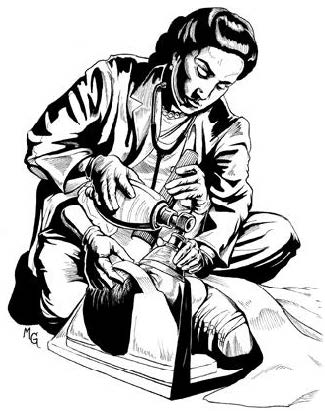
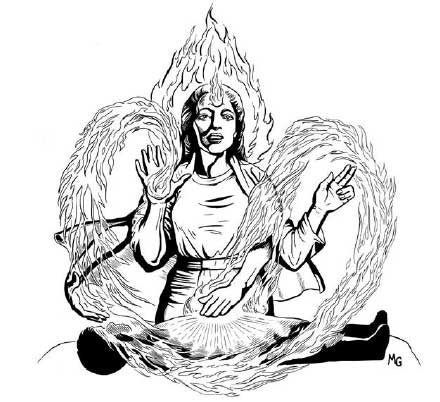
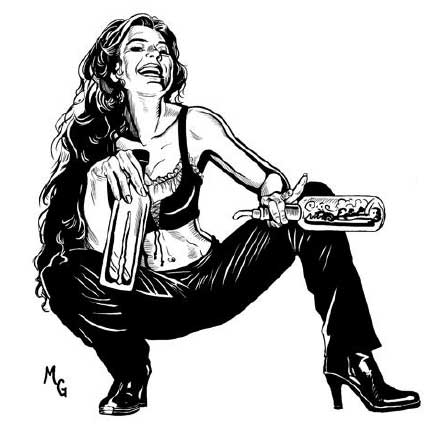
I played Amala Ali, the surgeon and goddess of fire. The other three players played the other pregens (Colt Bastian – god of music, Penelope Rivera – goddess of liquor, Benjamin Lowe – god of storm).
The pregenerated characters had their places of power already set. We shortly went over the entries and put a bit more detail into the trappings, the look, etc. of those places.
It started in Club Trinity (Penelope’s nightclub) during a concert by Colt when a minotaurus suddenly appeared and started a rampage amongst the guests. The people panicked, but Penelope managed to get everyone outside safely and without anyone getting injured. The sudden appearance of the minotaurus was accompanied by a sensation of the “Spark”, the working of the Source’s power.
Meanwhile Benjamin, coming out of his office, and Amala, just leaving her work at the hospital, felt the sensation that something strange happened on their territory. The contacted the others in their pantheon an met at the club.
The minotaurus was already under control, made drunk by Penelopy and mentally confused by Colt’s guitar solo. Soon after the others entered a white figure manifested itself in the club and demanded from us “the book of all stories” to be delivered until sunrise, or everything we hold dear would be destroyed. This strange book is supposed to be on our territory and we must hand it over to her if we don’t want to lose our loved ones. Then she disappeared taking the minotaurus with her.
Some research provided the information that this entity apparently commanded a whole army of monstrous followers, so that a more “direct” approach to remove the threat was not advised. So we started looking for this ominous “book of all stories”.
In the city hall’s archive we surprisingly found the book, but other (not quite natural) fellows were apparently interested in that book, too. It came to a fight in which I as goddes of fire might have been able to eliminate the threat easily, if not for my bond as surgeon to save life which I needed to follow. So I fought for the life of a critically injured bystander all the while by fellow gods tried to fight their attackers off. Finally they could overcome their opponents, although by resorting to the very flashy “light show” of Benjamin’s storm powers.
This brought about the police, who was situated in the same building, and we had to use all of our wits to talk us out of this situation, which we barely managed to achieve.
The we went back to the club and prepared our “patron” a truly warm welcome: in the form of a trap, a cage made out of pure fire. The moment she came to collect the book we sealed her in the cage and forced her to concede and give up her plans as far as they concerned us.
Now Colt has the book and he will probably use it as source of inspiration for his next album.
My impression playing this alpha version:
The Fate typical elements work in the usual ways. The Bonds introduce perceptible complications in the life of a young god. The divine special abilities – like the four arms of my character – are interesting and add a decent amount of weirdness, and the Relics – like Penelope’s Flask of Sprits – are helpful but not too overpowerd. The opponents are challenging, and keeping the public none the wiser makes normally more straightforward solvable situations to real problems, requiring all the wits the players can contribute.
Would I like to play Part-Time Gods of Fate again?
Yes, definitely. Preferably as a whole campaign, of course, because in my impression it is the campaign game where PTGoF can really show all the strong points it has to offer.
Top
Further Information about Part-Time Gods of Fate
Following are listed some interesting links to gain further information. In the videos and audio podcasts the developers themselves have the word.
Part-Time Gods of Fate Kickstarter Campaign Page (take a look at the commentaries there, because there is some interesting information about further aspects of Part-Time Gods of Fate to be found)
Misdirected Mark Podcast about Part-Time Gods of Fate (PTG of Fate starting at minute 52:40)
The Redacted Files Podcast – Interview about Part-Time Gods of Fate (here Eloy Lasanta, the creator of the original version of PTG has the word)
Beta version of Part-Time Gods of Fate (you cannot get a better impression about how the final product might turn out than by taking a look at this beta version; of course the final version will present, as announced, much more material about the setting and background)
Here are the Hangout Overlays for use with the Hangout Toolbox App which I had prepared for our playtest game of Part-Time Gods of Fate:
Questions and comments please here or via Google+ (I’m NOT at Facebook).
If someone is interested in an Online Gaming Session of Part-Time Gods of Fate via Hangout, please contact me on Google+.